Visuals
Placemaking concepts
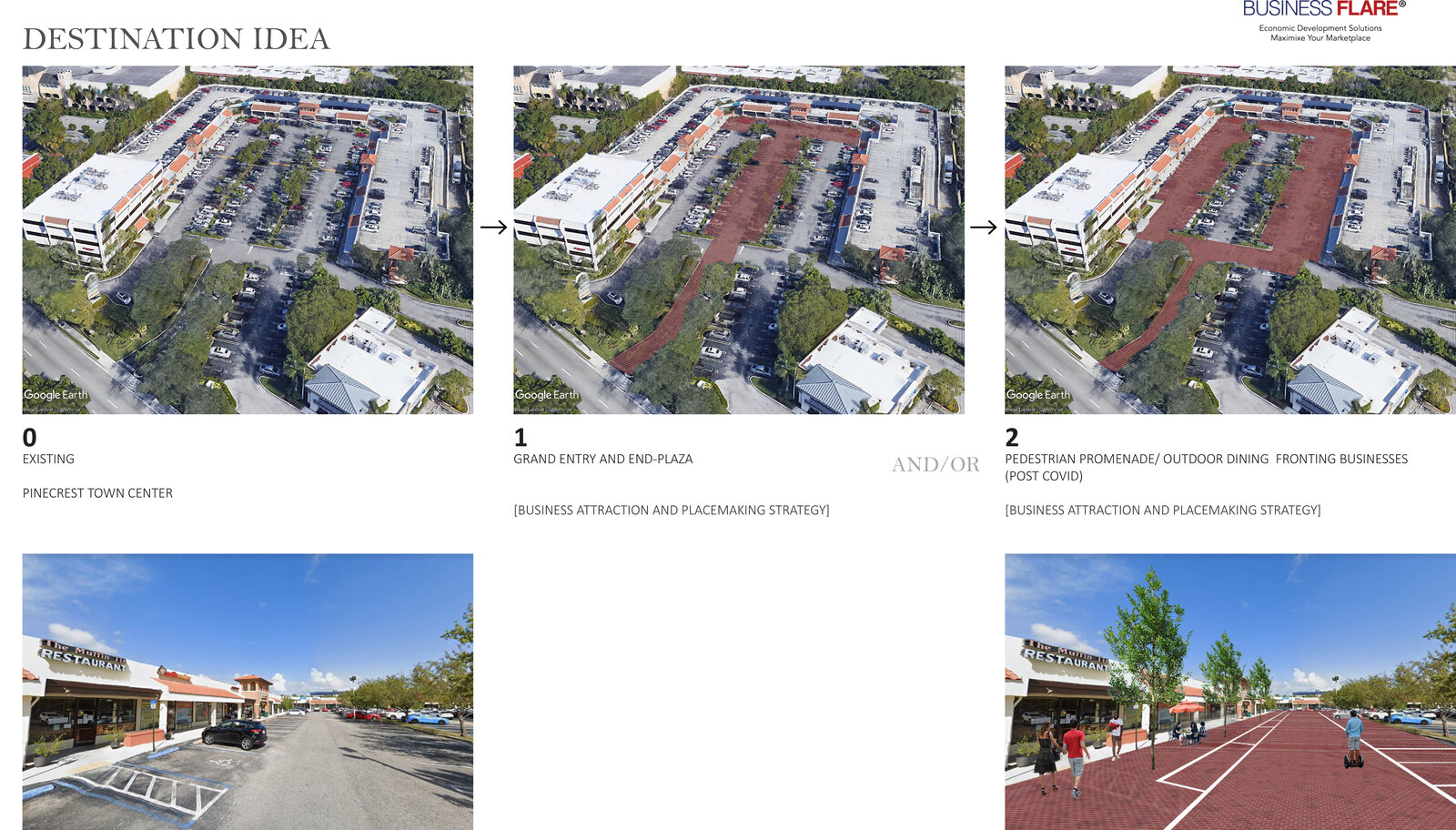
A five-driver market analysis of the 3.75-mile US-1 corridor that reframed an affluent, built-out village as a redevelopment opportunity — and a data-backed blueprint to build a walkable main street.
BusinessFlare® delivered a comprehensive market analysis of Pinecrest's US-1 corridor — a 3.75-mile study area from Snapper Creek Canal to SW 136th Street — built on the firm's five-driver investment framework: Land, Labor, Markets, Capital, and Regulations.
The analysis diagnosed a paradox — an exceptionally affluent, high-demand community that is essentially built out, with 96.3% of its tax base tied to residential land — and translated it into a redevelopment strategy centered on a walkable Town Center, plaza retrofits, and a US-1 transit station.
Pinecrest is wealthy, in high demand, and out of room. With supply frozen and 96.3% of value residential, tax-base and quality-of-life growth can only come from redeveloping and intensifying the US-1 corridor — turning 100,000-vehicle-a-day traffic and triple-county incomes into a walkable, tax-generating main street.
The market analysis is organized around five economic drivers. Open each to see what it found and what it means for redevelopment.
The Miami metro has outpaced the U.S. on home prices since 2011, and the pandemic intensified an already tight market. Supply, however, is essentially frozen — leaving intensification as the only path to growth.
Pinecrest's workforce is highly educated and concentrated in professional sectors — but it works elsewhere, an opportunity to create the 'third places' and work-near-home amenities that keep talent and spending local.
Incomes roughly triple the county's, and US-1 draws an affluent regional trade area — yet residents leave the Village for a main-street experience, signaling clear unmet demand.
Pinecrest keeps one of the lowest millages for a residential Miami-Dade community, but nearly all taxable value is residential — so new fiscal capacity depends on mixed-use value along the corridor.
The corridor's conventional, auto-oriented zoning offers no mixed-use pathway. The report stresses that certainty, information, and credibility drive private investment — so regulatory flexibility is the unlock.
US-1 is corridor #6 in Miami-Dade's SMART Plan (South Dade Transitway), with a preferred BRT station inside Pinecrest — a chance to anchor walkable, transit-oriented development on the corridor.
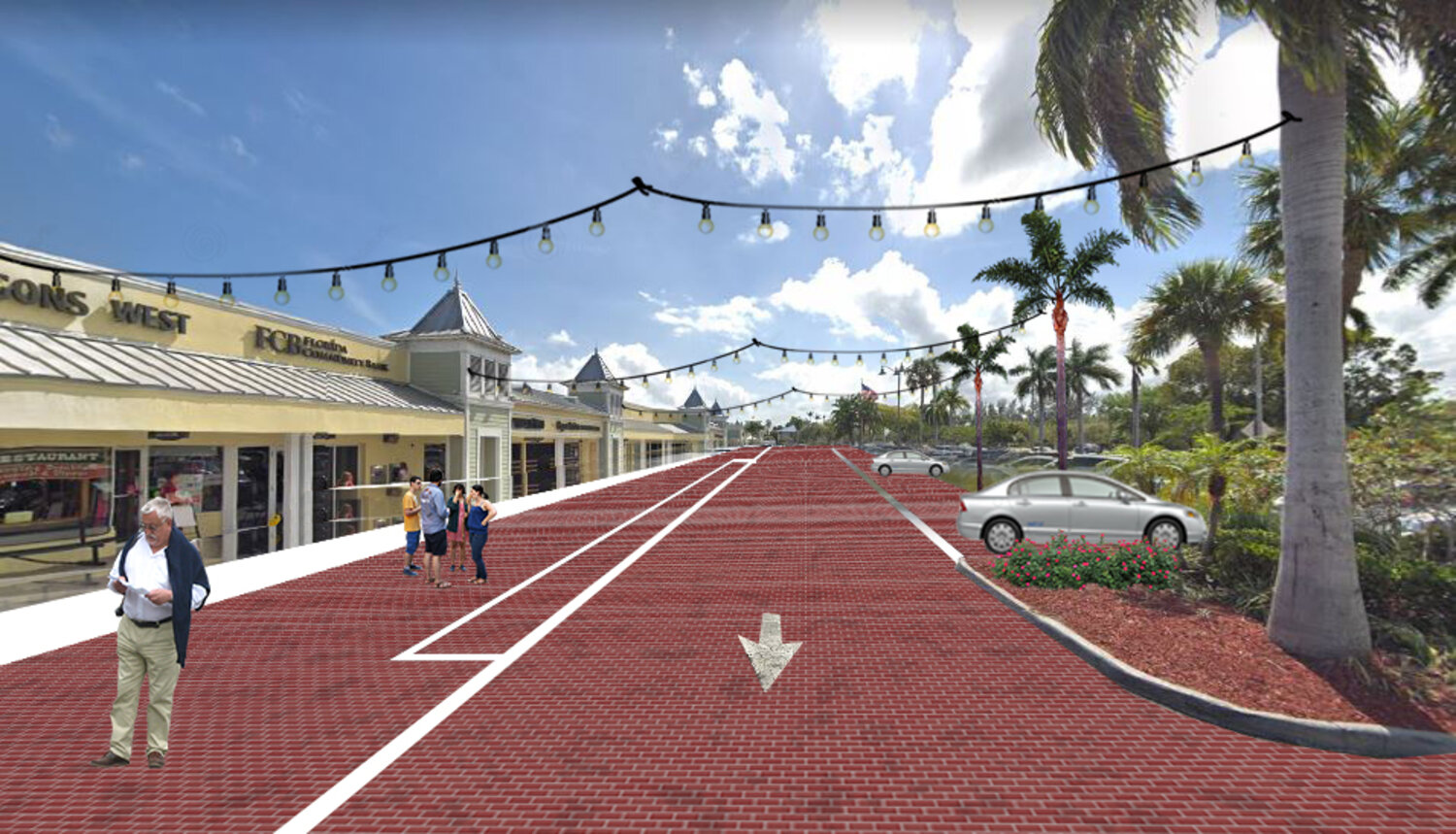
The report converted its diagnosis into five concrete, actionable moves — each paired with 'existing vs. potential' vision renderings for the 136th & US-1 intersection and a typical US-1 plaza.